Monday, October 14, 2013

Politics of the shutdown


Due to the government shutdown, there’s been a raft of soul-searching as to how American politics got to this point. In Collapse and the Sorites Paradox, I argued that collapse was impossible to speak about unless we defined a specific event that we could call a collapse. One of the possibilities I talked about was a debt default, which we are now only days away from (another one, secession, we talked about last month). So it looks like people like Dmitry Orlov might be due for a victory lap, although this crisis is entirely artificial and caused by political dysfunction rather than anything to do with oil prices.

Although these article have different perspectives, I’m going to try and summarize their conclusions below, along with some of my own, into a coherent narrative. Hopefully it’s close to the mark.

The short version is this: Wealthy elites, alarmed at the flattening of incomes that had happened between World War 2 and the 1970's decided to wage an all-out campaign to undo those policies (unions, a social safety net, good public services, progressive taxation,  environmental regulations, etc). To do so, they allied with all of the most venal, extremist, paranoid, reactionary and authoritarian elements in American society that had always been lurking under the surface but had been marginalized and kept under control by the "adults": John Birchers, Evangelical fundamentalists, Christian Reconstructionists, Southern racists, white supremacists, Dixiecrats, Posse Comitatus, "Big Mule" politicians, corrupt politicos, "sovereign citizens," "Patriot" militia brigades, libertarian Robber Barons (Koch Brothers, et. al.), Wall Street swindlers and takeover artists, Randroids, social Darwinists, and so forth, and used these elements to take over one of America's two major political parties in the name of eliminating their taxes, curtailing regulations, and busting unions. Now, having united all of the worst elements in American society under one banner for the first time (for they seem to have little else in common), organizing it, shaping it, and giving it a powerful vehicle (the reactionary authoritarian movement that calls itself the Republican Party), the business class can no longer control it, and like The Sorcerer's Apprentice, can only watch helplessly as the forces it has unleashed for it's own short-term benefit, fueled by white rage and decreasing living standards, tear the country apart (the "Corn-pone Nazis")

Here's the longer story: After World War 2, white Americans were lured by low taxes (because receipts were driven by future growth) into separatist suburban enclaves in the former cornfields surrounding now-decrepit cities made possible by the automobile. As they fled, they took economic activity and jobs with them, creating creating a vacuum in America's once-proud urban areas which promptly fell into disrepair thanks to the shrinking tax base and became minority ghettos. Coincident with this, there was a large population shift by individuals and businesses away from the “Rust Belt” states to the low wage and nonunion “Sun Belt” states of the South and Southwest, lured once again by lower taxes fueled by continuous growth, and made livable by the widespread use of air conditioning.

Subsequently, the American economy became “financialized;” America’s industrial might which won the war was packed up and shipped wholesale to China in less than a generation, leading to low-wage service jobs replacing factory jobs as the foundation of the economy.  Americans have consequently been experiencing stagnant wages for forty years, along with skyrocketing costs for healthcare, education, transportation, etc., while at the same time the tax burden was shifted off of unearned income and onto wages, and government services became "fee-based." The American public Balkanized along income lines, with wealthy Americans effectively seceding from the wider society, a society that was becoming less white and more urban over time.

A small cabal of wealthy oligarchs who had captured all of the income gains of the past forty years used part of this money to create a vast propaganda apparatus targeted to these white separatist enclaves in the suburbs, economically depressed rural areas, and the Sun Belt with things like FOX News, talk radio, think-tanks, online Web sites, etc. creating an echo chamber designed to radicalize white America. By denigrating and delegitimizing even the very idea of popular government, they hoped to create a faux-populist movement to untax themselves and undo the social reforms of the twentieth century and return to the policies of the Gilded Age. They allied with the Evangelical movement and began using divisive social issues to play “divide-and-conquer” against the lower classes.

The core of the movement is in the old Confederacy, where there is a long-standing legacy since the Civil War of undermining the authority of the Federal Government at every turn in order to keep power in the hands of local businessmen and politicians in order to maintain the system of class privilege and repression that is the legacy of Southern slavery. The South is also the nation’s stronghold of racism, ignorance, paranoia, religious fundamentalism, violence, gun ownership, social dysfunction (e.g. higher incidents of teen pregnancy, rape, incarceration, child abuse, infant morality, drug abuse, etc.), poverty and lower economic output. If Dixieland cannot control Washington, they will shut it down completely.

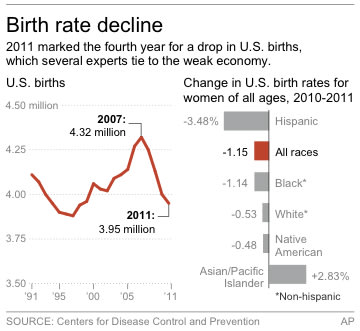
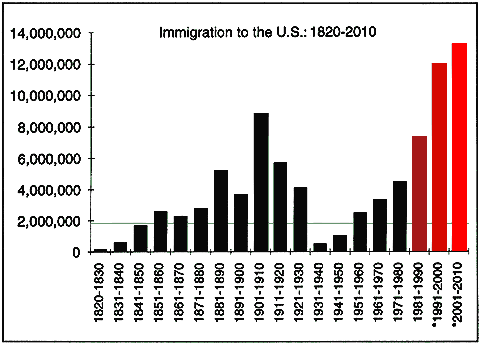
The untax the wealthy movement found a new life in the anger over the government bailouts, the election of an African-American president, and the economic downturn. Whites, destined to become a minority in America due to immigration and low birth rates, went into a profound psychosis, and wealthy oligarchs took advantage of this to bankroll a “Tea Party” movement, claiming that Obama was a Marxist, an atheist, a secret Muslim, was not born in the United States, will seize people's guns, etc., and laying the blame for nation’s problems directly at the feet of the victims of the economic recession (mainly poor and minority scapegoats) and “government taxes and regulations” (and not on Wall Street, corporations, or the banking industry).

To this end, they took effective control of one of the United States’ two major political parties and created a coherent worldview centered around what has been called “the paranoid style in American Politics.” for the New Right, the declining fortunes of white America were caused by an activist government determined to levy high taxes on “productive” (mainly white) citizens to give to a lazy and shiftless (mainly black) citizens in order to buy votes. They argued that America was divided into “makers” and “takers” (or ants and grasshoppers) where half of all Americans (the “47 percent”) pay no income taxes and thus are economically unproductive and entirely dependent upon government largesse (Mitt Romney: "They will never take responsibility for their lives"). They stoked rage against these “unproductive” citizens and argued that America’s massive debt burden was caused by a social safety net that had become a “hammock” lulling Americans into indolence (and not caused by tax cuts, the economic downturn, two simultaneous wars, or rising health care costs). Deindustrialization was not caused by the race to the bottom but by “greedy unions” and the housing meltdown was caused not by deregulation but by government forcing banks to make loans to poor minorities. Any form of government assistance was ”rewarding bad behavior,” and people had to be left to the mercy of the free market to "sink or swim" in a harsh, competitive world. The free market creates an ideal meritocracy; the poor, unemployed and indebted are exactly where they are entirely through their own actions, while the rich and powerful earned every penny through superior skills and talent. The poor must be made to suffer to give them the proper "motivation" to become productive citizens. As economic conditions deteriorate for most people, the resulting social dysfunction is put forward as the very cause of negative economic outcomes for the working class.

They made obscure books like “The Road to Serfdom" (which posits that government programs inevitably lead to oppression) and the works of Ayn Rand (where all economic benefits flow entirely from the efforts a small slice of wealthy elites and altruism is depicted as evil) into virtual bibles. At the same time, their media outlets portrayed all nonaligned media as “liberal” (and therefore not to be trusted), and claimed that both sides are "equally extreme,” despite a wholesale abandonment of pro-worker policies by the Democratic party (Bill Clinton: ”The era of big government is over, we must end welfare as we know it," etc.).

They also spent millions forming think-tanks and promoting the economic ideas  of the “Austrian School,” a formerly little-known economic doctrine that preached that any government interference in the market would harm the economy, that “letting the market sort it all out” was the only valid course of action, and that rather than mitigate the worse effects of the Great Depression, the New Deal actually prolonged the Great Depression. Government debt is always bad and the government must run its finances “like a household.” The Federal Reserve and “fiat currency” should be abolished and a gold standard should be reinstated to create “sound money.” All taxation is considered to be theft or “punishing success,” and goes into the hands of a government that is always and everywhere wasteful and inefficient (except for the police, security and defense industries). The private sector is superior to government in all cases, and failures of the private sector are always caused by some sort of government interference.

Because of certain political ideas inherent to the American system of government, a small, determined, well-funded minority can effectively throw sand in the gears of government when they do not get their way. This stems back from compromises made to slaveholding states, and the fear that “mob rule” would allow the majority to effectively seize power from the landholding aristocracy. Lower populated rural areas have disproportionate power over densely populated rural areas, especially in the Senate. In the House of Representatives, "gerrymandering," the practice of drawing districts to take advantage of America’s racial and income balkanization to create “safe” districts free from challenges to other parties, makes one party rule all but assured. Unlimited campaign spending has made politicians in uncompetitive districts fear primary challenges, since primary voters are the radical Jacobins of the party who will “punish” what they perceive as politicians willing to compromise. Unlike a parliamentary system, the levers of power are held by different parties both of whom claim legitimacy and can sabotage government functions through parliamentary maneuvers like filibustering and preventing votes from coming to the floor.

Now business leaders have effectively lost control over the party they took over, as the elements they unleashed with the objective of lowering their taxes and regulations has become a fanatical, radicalized, reactionary, nativist, conspiratorial, authoritarian political movement, opposed to even the very concept of government or the public trust in the name of “liberty. To them, government is always too large, taxes are always too high, and any sense of common purpose is derided as “socialism.” They see the nineteenth century as a golden age worthy of returning to, and see themselves engaged in a life and death struggle for the “soul” of the nation. They regard anyone else with a different opinion as “traitors" and opponents not to be negotiated with, but as threats to be eliminated. The right has even resorted to physical intimidation and has even formed a modern version of the Freicorps of inter-war Germany.

As whites become a minority, they increasingly look to disenfranchise large poor, minority, urban and youth voting blocks in order to retain power by any means necessary. In addition to gerrymandering, they have drummed up fear of nonexistent “voter fraud” to require ID’s at the polls, and they intentionally defund and understaff districts in poorer areas to prevent voter turnout, along with more direct vote suppression tactics such as armed "citizen monitoring" of polls. Increasingly, the focus is on electing allied candidates at the state level such as governors who have implemented identical policies around the nation (mostly written by ALEC) and followed identical lock-step agendas across a wide range of states such as cutting taxes, breaking unions, privatizing government, halting public transportation initiatives, passing “stand your ground” laws, overturning limits on campaign donations, selling off public lands and facilities, defunding social programs, and so forth.

As these policies make the white working class poorer and make the wealthy ever more powerful, the cycle is sure to keep repeating itself, making America ever more dysfunctional until it finally becomes ungovernable, ending up as a corrupt third-rate banana republic and failed state of only fantastically rich and desperate poor as the rest of the world looks on in a mixture of horror and pity at what was once the most admired nation on earth.

In addition, the following concepts are necessary to explain the world-view of the American Right-Wing:

1.) Producerism: “a doctrine that champions the so-called producers in society against both “unproductive” elites and subordinate groups defined as lazy or immoral.”

2.) The Just World Fallacy “Zick Rubin of Harvard University and Letitia Anne Peplau of UCLA have conducted surveys to examine the characteristics of people with strong beliefs in a just world. They found that people who have a strong tendency to believe in a just world also tend to be more religious, more authoritarian, more conservative, more likely to admire political leaders and existing social institutions, and more likely to have negative attitudes toward underprivileged groups. To a lesser but still significant degree, the believers in a just world tend to ‘feel less of a need to engage in activities to change society or to alleviate plight of social victims.’”

The Self-Attribution Fallacy/Horatio Alger/Fundamental Attribution Error: “Pull yourself up by your own bootstraps”

Calvinism/The Prosperity Gospel/New Thought Movement “God wants you to be rich.”

The Tytler Calumny: "A democracy is always temporary in nature; it simply cannot exist as a permanent form of government. A democracy will continue to exist up until the time that voters discover that they can vote themselves largesse from the public treasury. From that moment on, the majority always votes for the candidates who promise the most benefits from the public treasury, with the result that every democracy will finally collapse over loose fiscal policy, (which is) always followed by a dictatorship."

Social Darwinism: “A drunkard in the gutter is just where he ought to be”

Mellonism/Hooverism “Liquidate labor, liquidate stocks, liquidate the farmers, liquidate real estate. Purge the rot from the system”

The Objectivist Movement/Ayn Rand: “Money is not the tool of the moochers, who claim your product by tears or of the looters, who take it from you by force. Money is made possible only by the men who produce. Is this what you consider evil?”

Nostalgia: “Didn’t need the welfare state/Everybody pulled his weight/guys like us we had it great/Those were the days.”

Christian Reconstructionism/Dominionism

On to the articles:
For years, political scientists have been talking about how the demographic changes in the United States are inexorably leading to a Democratic majority, with Hispanics and Asian-Americans joining African-Americans and liberal urban whites to erode the political domains of white conservatives and white racists. 
But those predictions have always assumed a consistent commitment to the democratic principle of one person, one vote – and a readiness of Republicans to operate within the traditional standards of democratic governance. But what should now be crystal clear is that those assumptions are faulty. 
Instead of accepting the emergence of this more diverse and multi-cultural America, the Right – through the Tea Party-controlled Republicans – has decided to alter the constitutional framework of the United States to guarantee the perpetuation of white supremacy and the acceptance of right-wing policies. 
In effect, we are seeing the implementation of a principle enunciated by conservative thinker William F. Buckley in 1957: “The white community in the South is entitled to take such measures as are necessary to prevail, politically and culturally, in areas in which it does not predominate numerically.” Except now the Buckley rule is being applied nationally.
The White Man's Last Tantrum? (Consortium News)
To many Americans, the shutdown came out of nowhere. But interviews with a wide array of conservatives show that the confrontation that precipitated the crisis was the outgrowth of a long-running effort to undo the law, the Affordable Care Act, since its passage in 2010 — waged by a galaxy of conservative groups with more money, organized tactics and interconnections than is commonly known.

With polls showing Americans deeply divided over the law, conservatives believe that the public is behind them. Although the law’s opponents say that shutting down the government was not their objective, the activists anticipated that a shutdown could occur — and worked with members of the Tea Party caucus in Congress who were excited about drawing a red line against a law they despise.

A defunding “tool kit” created in early September included talking points for the question, “What happens when you shut down the government and you are blamed for it?” The suggested answer was the one House Republicans give today: “We are simply calling to fund the entire government except for the Affordable Care Act/Obamacare.”
A Federal Budget Crisis Months In The Making (New York Times)
Needham was cocky and brazen, and yet Republicans — even powerful ones such as Ryan — have to take him seriously, for the same reason they must allow themselves to be pushed around by freshman Cruz: GOP lawmakers live in fear of primary challenges from tea-party candidates, so they must obey those who influence tea-party activists. Like Cruz, Needham’s group has influence. It also has a lot of cash.

The Heritage Foundation tapped Needham, a Heritage staffer, to create Heritage Action three years ago, a few months after the Supreme Court’s Citizens United decision made such 501(c)(4) organizations a new way for the wealthy to influence politics. Needham’s operation fits well with recent moves by Heritage’s new president, former senator Jim DeMint (R-S.C.), to politicize the old think tank, and it rivals another 501(c)(4), the Club for Growth, in its capacity to terrify Republican officeholders.
The shutdown's enforcer-in-chief (Washington Post)
In the 2012 elections, a little more than 59.6 million Americans voted for representatives from the Democratic party while 58.2 million voters supported the Republican candidate. But due to the way that congressional districts are organized, Democrats got 33 fewer seats than the GOP in the House of Representatives. So right off the bat, the House GOP represents a minority of Congressional voters.

But it gets worse.
How Less Than 5% Of The US Population Caused The Government To Shut Down (Business Insider)
Fear of a changing society is one thing that unites all three factions. The battle over Obamacare, write the study’s authors, “goes to the heart of Republican base thinking about the essential political battle.”

    They think they face a victorious Democratic Party that is intent on expanding government to increase dependency and therefore electoral support. It starts with food stamps and unemployment benefits; expands further if you legalize the illegals; but insuring the uninsured dramatically grows those dependent on government. They believe this is an electoral strategy — not just a political ideology or economic philosophy. If Obamacare happens, the Republican Party may be lost, in their view.

    And while few explicitly talk about Obama in racial terms, the base supporters are very conscious of being white in a country with growing minorities. Their party is losing to a Democratic Party of big government whose goal is to expand programs that mainly benefit minorities. Race remains very much alive in the politics of the Republican Party.

    They worry that minorities, immigrants, and welfare recipients now believe it is their “right” to claim [public] benefits. Tea Party participants, in particular, were very focused on those who claim “rights” in the form of government services, without taking responsibility for themselves.

They are also unified in their belief that Obama is a usurper who has hoodwinked the public into re-electing him by hiding his true beliefs, which are essentially Marxist. They also think that Democrats have won the major political battles of our time because Republican legislators in Washington didn’t put up a fight.

But there are also deep divisions within the base, according to the analysis. Evangelicals still focus overwhelmingly on social issues. They think gay rights are the biggest threat to our society, but they also worry about the loss of what they see as an idyllic small-town culture. They feel besieged as the cultural ground shifts beneath them, and see themselves as a beleaguered, “politically incorrect” minority.

Tea partiers display a libertarian streak, and are far less concerned with social issues. They are staunchly pro-business. But there’s an easy alliance between these two groups – which make up well over half of the GOP base – because Evangelicals think the tea partiers are fighting back, and vice versa.

Both groups displayed a high level of paranoia, according to the researchers who conducted the study. They noted that this was the first time, in many years of conducting focus groups, that participants worried that their participation might trigger surveillance by the NSA or an audit by the IRS. In addition to thinking that Obama is a liar, and a covert Communist, these two groups were also more likely to express the belief that he is secretly a Muslim.
To understand the shutdown, you have to grasp the mindset of the Republican base (Raw Story)
The Tea Party right is not only disproportionately Southern but also disproportionately upscale. Its social base consists of what, in other countries, are called the “local notables”—provincial elites whose power and privileges are threatened from above by a stronger central government they do not control and from below by the local poor and the local working class.

Even though, like the Jacksonians and Confederates of the nineteenth century, they have allies in places like Wisconsin and Massachusetts, the dominant members of the Newest Right are white Southern local notables—the Big Mules, as the Southern populist Big Jim Folsom once described the lords of the local car dealership, country club and chamber of commerce.  These are not the super-rich of Silicon Valley or Wall Street (although they have Wall Street allies). The Koch dynasty rooted in Texas notwithstanding, those who make up the backbone of the Newest Right are more likely to be millionaires than billionaires, more likely to run low-wage construction or auto supply businesses than multinational corporations. They are second-tier people on a national level but first-tier people in their states and counties and cities.

For nearly a century, from the end of Reconstruction, when white Southern terrorism drove federal troops out of the conquered South, until the Civil Rights Revolution, the South’s local notables maintained their control over a region of the U.S. larger than Western Europe by means of segregation, disenfranchisement, and bloc voting and the filibuster at the federal level. Segregation created a powerless black workforce and helped the South’s notables pit poor whites against poor blacks. The local notables also used literacy tests and other tricks to disenfranchise lower-income whites as well as blacks in the South, creating a distinctly upscale electorate. Finally, by voting as a unit in Congress and presidential elections, the “Solid South” sought to thwart any federal reforms that could undermine the power of Southern notables at the state, county and city level. When the Solid South failed, Southern senators made a specialty of the filibuster, the last defense of the embattled former Confederacy.

When the post-Civil War system broke down during the Civil Rights Revolution of the 1950s and 1960s, the South’s local notable class and its Northern and Western allies unexpectedly won a temporary three-decade reprieve, thanks to the “Reagan Democrats.” From the 1970s to the 2000s, white working-class voters alienated from the Democratic Party by civil rights and cultural liberalism made possible Republican presidential dominance from Reagan to George W. Bush and Republican dominance of Congress from 1994 to 2008. Because their politicians dominated the federal government much of the time, the conservative notables were less threatened by federal power, and some of them, like the second Bush, could even imagine a “governing conservatism” which, I have argued, sought to “Southernize” the entire U.S.

Turning over federal programs to the states allows Southern states controlled by local conservative elites to make those programs less generous—thereby attracting investment to their states by national and global corporations seeking low wages.

Privatizing other federal programs allows affluent whites in the South and elsewhere to turn the welfare state into a private country club for those who can afford to pay the fees, with underfunded public clinics and emergency rooms for the lower orders. In the words of Mitt Romney: “We pick them up in an ambulance, and take them to the hospital, and give them care. And different states have different ways of providing for that care.”

When the election of Lincoln seemed to foreshadow a future national political majority based outside of the South, the local notables of the South tried to create a smaller system they could dominate by seceding from the U.S. That effort failed, after having killed more Americans than have been killed in all our foreign wars combined. However, during Reconstruction the Southern elite snatched victory from the jaws of defeat and succeeded in turning the South into a nation-within-a-nation within U.S. borders until the 1950s and 1960s.

Today the white notables of the South increasingly live in states like Texas, which already have nonwhite majorities. They fear that Obama’s election, like Lincoln’s, foreshadows the emergence of a new national majority coalition that excludes them and will act against their interest. Having been reduced to the status of members of a minority race, they fear they will next lose their status as members of the dominant local class.
Tea Party radicalism is misunderstood: Meet the “Newest Right” (Salon)
What is surprising and interesting is when this conflict is experienced not as a matter of interests but of identity. It’s one thing to see urbanites as fellow citizens whose policy preferences depart from one’s own; it’s quite another to argue that their policy preferences give rise to serious doubt about whether they’re really Americans. Yet exactly this is the message of all those conservative complaints about “socialistic” Democrats who ignore our constitutional traditions as they labor to install a “nanny state.” These aren’t true Americans, resolute, independent, self-reliant; they’re feckless, faux-European traitors. (Though one, in particular, may have closer connections with Africa than Europe. You know who I mean.)
To think in this way, one must identify the country with one’s own beliefs and values. Those with different preferences then become almost definitionally “un-American.” This identification has the consequence, however, that political conflicts are often experienced as personal crises; what’s at stake isn’t simply policy, but one’s own sense of self. This releases anxieties that cluster around an intensely imagined Other: liberal, conspiratorial, seditious.

A partial answer arises directly from the sociology of rural culture. Persons who live in cities learn quickly that the world is full of different kinds of people; diversity — of race, religion, outlook, speech, etc. — is a fact of life. Because of this, they tend not to connect these personal attributes with one’s ability to be a trustworthy member of the community. If they think about the conditions of citizenship, they are more likely to associate them with general qualities of character — honesty, integrity, loyalty — equally available to everyone, regardless of background.

Many rural areas, by contrast, lack this aboriginal experience of diversity; they may be characterized by high levels of uniformity in ideology, race and religion. Given this, it may be natural to assume that “everyone” believes what you believe, or worships as you worship, or looks and speaks as you look and speak. And because these attributes characterize the community as a whole, it may be equally natural to define the latter in terms of the former — to think of these qualities as necessary for responsible citizenship, for being “one of us.” Only a small step is needed to extend this logic from one’s own community to the country as a whole.

I said this answer is only partial. That’s because it explains why the identification of self with nation arises in the first place, but not why it persists. In the America of 2013, more thoroughly colonized by communications technology than any society in the history of the planet, no community is an island; each is part of the main — and The Matrix. Geographic isolation has been overwhelmed by smart phones, the internet, cable and satellite TV and Red Box. One’s own community might be an emblem of ideological orthodoxy, racial purity or religious conformity — but there is no escaping the knowledge that the country as a whole (much less the world) is not. So if we want to know why this identification endures in some environments but not others, we’ll have to add something to our account — a mechanism to explain the stubborn insistence that some people will always be outsiders. And because the South is ground zero for the paranoia that rules today’s Republicans, our explanation will have to apply with particular force and resonance to it.

I don’t think we have to look far. The explanation lies in the South’s experience with black slavery and white supremacy...This is a fraught subject, so I want to make my meaning clear. I am not arguing that all Southerners — or all conservatives — are racists or paranoids; I’m not even arguing that all Southerners are conservatives. (I myself would personally disprove that assertion.) Slavery, thankfully, disappeared long ago, and Jim Crow is now almost two generations behind us. Racism lingers on in the South as in America generally, but for the most part must now keep its head down and its voice low; it’s the vice that dare not speak its name. (This is not to deny, of course, that it retains considerable social valence.)  What I am arguing is that a certain habit of thought, powerfully shaped by the experience of slavery, survived the passage of that curse and continues to influence some Southern conservatives to this day. It no longer takes the form of a blatant assertion that only the white race is worthy of social trust; its definition of the normative community has shifted. (Though it remains associated with racialist, or at least race-conscious, themes.) It is now more likely to define that community in ideological terms — to see it as consisting of those who endorse a particular view of government and its rightful relations with traditional mores and economic power. It has, however, retained certain aspects of its earlier, darker origins. It is still obsessed with purity — ideological if not racial — and still invests those it regards as impure with a harsh, acute animus. And it continues to equate difference with illegitimacy. Those on the outside — the liberals, the Democrats, the “socialists” — cannot be trusted partners in political life; they want only to undermine our institutions and must therefore be expelled from them.

Thus we arrive at the paranoid version of politics described above, in which policy disputes signal an insidious betrayal of “our” way of life. This is surely what animates the conduct of today’s Republicans — the reflexive rejection of compromise, the flagrant violation of long-established institutional norms, the experience of diversity as an invasion by foreign, unfamiliar powers.

The Republican belief that it would be better to suspend the government (or default on the debt) than to fund “Obamacare,” for instance, can be explained only by this kind of wrathful, embattled logic. There is a sense in which the current shutdown is the culmination of the last 50 years of Republican history. Today’s GOP is the heir of Reagan’s remark that “[G]overnment is not the solution… government is the problem,” even as Reagan embodied the strident, anti-statist dogmas of Barry Goldwater. The Party’s development since 1964 has, in effect, been one long preparation for the time when it would have to argue that no government would be better than liberal government. It would make no sense to say this if liberals were simply misguided souls with some bad policy ideas. It makes perfect sense when one sees them through the prism of Tea Party doctrine: as illegitimate interlopers from the outer darkness whose intent is to exploit and subvert the normative American community.
Modern GOP is still the party of Dixie (Salon)
Four years ago, the modern Tea Party seemed to emerge from nowhere, leaving journalists bewildered and the public with few reference points to understand seemingly spontaneous rallies by middle-class people seeking lower tax rates. A search for the phrase “tea party” in connection with “politics” in major newspapers yielded fewer than 100 mentions in 2008—and when the words did appear linked together, they suggested studied formality and decorum. The next year, they appeared more than 1,500 times, often connected to “protest demonstration.”

But little was spontaneous about the new party. “Social movements that explicitly defend the interests of the rich and the almost-rich have been a recurring feature of American politics,” Isaac William Martin, a sociologist at the University of California, San Diego, reminds us in his new book, Rich People’s Movements: Grassroots Campaigns to Untax the One Percent. “Such movements shook the American polity before the Obama era, before the Reagan era, and before Barry Goldwater ran for president—before, even, the New Deal.”

With meticulous research, Martin shows how the modern Tea Party grew from decades of efforts by American oligarchs to de-tax themselves. They relied on cranks, rogues, and a few scholars to polish the most effective ideological marketing pitches. Their goal was selling the notion that if the rich bear less of the burden of government, all of us will somehow end up better off. These pitches have worked best when some newly proposed government initiative—like President Barack Obama’s Affordable Care Act—arrives to pose the threat of major policy change. They have depended on diverting attention from obvious questions, such as just how does a smaller tax bill for the Koch brothers benefit us?
We Shall Overwhelm (The American Prospect)
Summary: The Right wing of America is active on all fronts: shutting down abortion, disenfranchising voters, and holding America’s credit rating hostage. Now we add to that list something small, but disturbing and with the potential to grow explosively: the Oath Keepers, one of the many militia-like groups, are “going operational”. 
The Oath Keepers want to give America its own Freikorps! (Fabius Maximus)

Ted Cruz, Leninist (The Atlantic) Critics think the Tea Party senator is being self-defeating, but his antics make sense if he's actually trying to remake the Republican Party in his image.
Christopher Parker and Matt Barreto, who teach political science at the University of Washington, recently published “Change They Can’t Believe In: The Tea Party and Reactionary Politics in America.” They contend that there are two major strands of conservatism in America: what they call “non Tea Party,” “traditional” or “real” conservatism; and what they describe as “Tea Party,” “reactionary” or “pseudo-conservatism.” 
In response to my inquiry, Parker wrote in an e-mail: 
Ultimately, a conservative — in the classical sense — wishes to preserve a stable society. Of course, this includes stable institutions and observing the rule of law. For these reasons (and several more), a conservative prefers evolutionary, more incremental change to revolutionary change: revolutionary change threatens the stability conservatives seek to conserve. Hence, conservatives reluctantly accept change — so long as it isn’t revolutionary. They do so for the sake of stability and order. Moreover, for the sake of order and stability, real conservatives are amenable to political compromise with their opponents. 
Conversely, according to Parker, reactionary conservatives are 
backwards looking, generally fearful of losing their way of life in a wave of social change. To preserve their group’s social status, they’re willing to undermine long-established norms and institutions — including the law. They see political differences as a war of good versus evil in which their opponents are their enemies. For them, compromise is commensurate with defeat — not political expediency. They believe social change is subversive to the America with which they’ve become familiar, i.e., white, mainly male, Protestant, native born, straight. “Real Americans,” in other words. 
Parker and Barreto conducted surveys to see if Tea Party conservatives differ from non-Tea Party conservatives. As the graphs in Figures 1-3 show, the two kinds of conservatives diverge significantly on key issues: immigration, civil liberties and in how they see President Obama. 
A newly published book, “Our Political Nature: The Evolutionary Origins of What Divides Us,” takes a different tack in exploring the contradictory ideological positions of left and right.  The author, Avi Tuschman, who earned a doctorate in evolutionary anthropology at Stanford and now works at the Inter-American Development Bank, contends that “the best cross-cultural predictor of left-right voting and party affiliation” is revealed by a 22-item test developed by Robert Altemeyer, an emeritus professor of  psychology at the University of Manitoba. You can take the test yourself on Pages 11 and 12 of this document. 
Altemeyer’s questionnaire asks respondents to estimate their agreement or disagreement with statements like these: 
  • The established authorities generally turn out to be right about things, while the radicals and protestors are usually just “loud mouths” showing off their ignorance. 
  • Atheists and others who have rebelled against the established religions are no doubt every bit as good and virtuous as those who attend church regularly. 
  • The only way our country can get through the crisis ahead is to get back to our traditional values, put some tough leaders in power, and silence the troublemakers spreading bad ideas.
  • Everyone should have their own lifestyle, religious beliefs, and sexual preferences, even if it makes them different from everyone else. 
  • God’s laws about abortion, pornography and marriage must be strictly followed before it is too late, and those who break them must be strongly punished. 
Tuschman makes the case that Altemeyer’s questionnaire reveals three clusters of measurable personality traits that correlate with political conservatism or liberalism:  
1) Tribalism vs. xenophilia (an attraction to outsider groups); religiosity vs. secularism; and different levels of tolerance of “non-reproductive sexuality”;
2) opposing moral worldviews concerning inequality, one based on the principle of egalitarianism, the other based on ordered hierarchy, what people used to call “the great chain of being”; and
3) perceptions of human nature, people who see human nature as more cooperative vs. others who see it as more competitive. 
John Jost, a professor of psychology and politics at N.Y.U., uses descriptive language (language other social scientists characterize as  unflattering) to describe conservatives and flattering language to describe liberals. In “Political Ideology: Its Structure, Functions, and Elective Affinities,” a 2009 paper, Jost and two co-authors write: 
Specifically, death anxiety, system instability, fear of threat and loss, dogmatism, intolerance of ambiguity, and personal needs for order, structure, and closure were all positively associated with conservatism. Conversely, openness to new experiences, cognitive complexity, tolerance of uncertainty, and (to a small extent) self-esteem were all positively associated with liberalism.
James Sidanius, a professor of psychology at Harvard, working from a liberal perspective, uses a measure he calls “Social Dominance Orientation” to describe “the extent to which one desires that one’s in-group dominate and be superior to out-groups.
” 
An individual’s social dominance orientation ranking, according to research Sidanius has conducted, derives from negative or positive responses to 16 statements. A person responding positively to the first eight (1-8) questions and negatively to the second group (9-16) would have a very high S.D.O. rating. 
First Group: 1. Some groups of people are simply inferior to other groups. 2. In getting what you want, it is sometimes necessary to use force against other groups. 3. It’s O.K. if some groups have more of a chance in life than others. 4. To get ahead in life, it is sometimes necessary to step on other groups. 5. If certain groups stayed in their place, we would have fewer problems. 6. It’s probably a good thing that certain groups are at the top and other groups are at the bottom. 7. Inferior groups should stay in their place. 8. Sometimes other groups must be kept in their place. 
Second Group: 9. It would be good if groups could be equal. 10. Group equality should be our ideal. 11. All groups should be given an equal chance in life. 12. We should do what we can to equalize conditions for different groups. 13. Increased social equality is beneficial to society. 14. We would have fewer problems if we treated people more equally. 15. We should strive to make incomes as equal as possible. 16. No group should dominate in society. 
In their book, Parker and Barreto found a strong linkage between higher S.D.O. ranking and Tea Party conservatives (“True Believers”). They write: 
S.D.O. is a reflection of one’s “preference for inequality among social groups.” Someone who has high levels of S.D.O. is likely to buy into the hierarchy-enhancing ideologies, ones that resulting in the perpetuation of inequality. People who are low on S.D.O. are more likely to promote equality. We contend that people high in S.D.O, people who are intent on keeping subordinate groups down as a means of maintaining group-based prestige, are likely to support right-wing movements and, therefore, the Tea Party. 
The following graph (Fig. 2), provided to The Times by Parker, shows that there are more Tea Party conservatives with high measured levels of social dominance orientation (39 percent) compared with non-Tea Party conservatives (30 percent).

Thursday, October 10, 2013

More monetary history - Roman edition


Since we talked about monetary history last time, I thought this would be a good time to include these fascinating posts from last year by Izabella Kaminsaka about finance in the Roman Empire. They debunk one of the most cherished libertarian beliefs- that the fall of Rome was caused by Diocletian's debasement of the currency. In reality, this was an symptom, not a cause, of an empire in the throes of decay. It could no longer expand, was wracked by migration, climate change, epidemic disease, extreme inequality, corruption, military overextension, and civil wars (sound familiar?). Simplistic explanations, especially ones that feed into a certain political agenda, are not to be taken seriously. Not that our current "default" is being driven by dysfunctional politics, not "money printing" per se.

I normally don't like to include entire posts, but this is too interesting, and I wanted to spare you the gateway on the FT site (all emphasis mine):
It’s Christmas. A time of year intrinsically linked to baby Jesus, a manger, some ancient wise men, choirs of angels and what is mostly an unflattering representation of the Roman Empire.

Roman PR has been faltering on other fronts as well, as this segment demonstrates…


The theory being pushed, of course, is that Rome’s debasement of the silver currency was somehow responsible for ultimate destruction of the Empire — making all this a highly relevant and cautionary lesson for today’s times. The moral of the story is perhaps best stated as: don’t do QE because the US Empire will be destroyed too. Or some such.

This also happens to be one of Ron Paul’s favourite fallbacks when it comes to justifying his rubbishing of the Fed and Ben Bernanke.

The theory featured prominently in a spat between Ron Paul and Paul Krugman in April this year, in which Ron Paul argued that QE would eventually lead the US to the same fate as the Roman Empire. Unfortunately, even Krugman failed to defend the Romans on the matter. In fact, he replied that he was not a defender of the economic policies of the Roman Emperor, Diocletian.

Which is a shame, because Diocletian really wasn’t as bad as many people make out, historically speaking.

Since it’s Christmas, a time of year when everyone deserves a proper hearing — and since I’ve always had a special place in my heart for the Romans, having been a student of Ancient History — I figured it might be useful to explain why a) Diocletian is misunderstood by modern economists and politicians, and b) why Rome did not fall because it debased its currency.*

First off, the Roman hyperinflation period — constantly referred to by debasement obsessives — post-dates actual debasement by about 60 years. Using it as a justification for the hyperinflation is like suggesting that a hypothetical debasement in the 1950s could in some way be responsible for today’s economic woes.

Secondly, the Roman debasement was not a one off affair. History tells us that the Romans were “debasing” their currency successfully for many decades with no hyperinflationary consequences. What changed ahead of the hyperinflation period of the third century, however, was that the Empire’s political stability was being threatened.

It’s as Dr. Benet Salway at UCL explained to us by email (our emphasis):

    In the case of the third century crisis it is arguable that the political instability preceded the monetary, in that debasement was used to make a finite amount of silver stretch further when pay rises and one-off payments were used to reward troops for support to a new claimant to the throne. There was a considerable timelag between debasement (starting with vengeance c. 200) and hyperinflation (which really did not kick in until the 260s). It is also notable that, despite re-establishing political stability Diocletian’s price control measures and currency revaluation both failed to curb inflation. It was only with Constantine’s shift away from debased and discredited silver coinage to the new gold solidus as the basis of the state’s monetary economy that inflation was brought under control. Ironically the success of the solidus as a stable coinage long outlasted the political existence of the empire in the west. The western empire’s collapse in the fifth century was not accompanied by financial meltdown. So, even in the Roman case the correlation between political and monetary stability is complex and varied.

As to what really caused the fall of Rome, we love the view presented by W.V. Harris at Columbia University.

In his paper “A revisionist view of Roman money” — in which he compellingly argues that Rome had a much more developed credit system than most people appreciate — he highlights amongst other things the following point:

    The purpose of this article has not been to demonstrate that per capita growth occurred in the late Republic or under the Principate (though such growth probably did occur in the second of these periods), but rather that shortage of money was not to any important extent a brake on growth. What impeded sustained economic growth in Roman antiquity was not a shortage of money, but mainly the failure to adopt technologies, especially a fuel technology, that would have allowed the Romans to escape from the Malthusian impasse. 
And as he explained further to us by telephone:

    The things that prevented the Romans from having a takeoff are basically two: One is lack of technological innovation. Lack of diffusion of productive technology and the other was not using fossil fuels. They didn’t, whereas England started having its industrial revolution (a much-debated question, as you know), in large part because of coal.

The other point worth stressing is that Rome’s credit system really was awash with private credit transactions (and debts). People like to focus on the coinage, but actually — if you follow Harris’ research — the primary mode of exchange for high value transactions, such as property, was credit. And that goes back to the days of the Republic. Coinage, meanwhile, was much more commonly associated with smaller daily purchases. When it comes to large gold payments, meanwhile, these were mostly dedicated to the settlement of international transactions. That is, for transacting with entities outside of the Roman credit system, and with people whose credit profiles were unfamiliar or not trusted by the Romans.

Sunday, September 15, 2013

Living standards before 1870

This week we've been highlighting economic history showing that before the year 1870, things for the majority of people outside a tiny elite really didn't get much better, and, in fact, sometimes got worse throughout thousands of years of history. This is important in understanding the shape of societies today, and the shape of what sorts of social changes may take place in the future. Invention, discovery, social change and innovation all combined in miasma of circumstances that are hard to untangle. Some argue that declining energy sources will mean the future will be a tape run in reverse. Others argue that innovation is limitless and will always rescue us from hard limits imposed by nature. But a hard look at economic history means that it's unlikely either of these two scenarios is in the offing.

Here's another good article from The Economist considering whether living standards at all changed that much before 1870.
AS WE showed in a previous blog post, Europe went through a period of astonishing growth after about 1760. The level of income that Europe has today could not have been reached without the Industrial Revolution.

In fact, people often refer to two revolutions (though historians bicker about terminology). The First Industrial Revolution was about the introduction of machines, often powered with water or steam. It lasted from roughly 1760 to 1850. The Second Industrial Revolution used more advanced technologies, such as the internal combustion engine and electricity. It lasted from roughly 1850 to 1910.

We know that the Industrial Revolution made Europe rich. But what was it like to live through it? Britain has the most complete historical records when it comes to this kind of thing, so this post will focus on that country.

The question boils down to how you measure living standards. Historians are divided over what happened to wages during the Industrial Revolution. Everyone agrees that they did increase; the question is, when...Research focuses on real wages—wages that are adjusted for inflation. Getting data on wages is tricky. But accounting for inflation is even harder. (For example, workers often paid rent informally, meaning that there are few records around)... It’s a bit of an academic mess.

Most people agree that after about 1840, real wages did better. Nicholas Crafts and Terence Mills shows that from 1840 to 1910, real wages more than doubled. Their findings are mirrored by other researchers (see below right). Improvements may be due to technological innovation, which led to big increases in labour productivity and hence higher wages. Others reckon it is because the cost of living did not increase so fast. And the massive economic impact of the Napoleonic Wars—where, due to naval warfare, exporters suffered and imports were more expensive—gradually wore off.

So, while the Industrial Revolution ultimately led to big increases in wealth, progress was unsteady. For much of the period, the average person was not reaping the benefits of economic change.

So much for wages. Other measures of standard of living should be considered.

There is increased enthusiasm for biological measures of standard of living, such as people’s height. Height is a useful measure for a number of reasons. It indicates how well someone is nourished. And people who do less manual labour, or who are less afflicted by disease, are likely to be taller. A person’s height is not perfectly correlated with their standard of living...but 20-40% of the difference in height between individuals is determined by environmental factors. And so at an aggregate level, height data are pretty helpful.

Some research presents a rather alarming picture. Below is a graph which shows the height of English soldiers from 1730 to 1850—a period which captures the First Industrial Revolution.

There are many different explanations for height declines during this period. Some people reckon that diseases in cities exploded. Other people think that unsteady economic growth led to increases in the frequency of unemployment, which had an impact on nutrition. And growth of agriculture may have lagged behind economic growth—which meant that the relative price of nutrients increased at a time when transportation was poor and food preservation was primitive.

Other research has shown that city dwellers tended to be shorter than rural folk, even though the urbanites were generally richer. Access to food was easier for those living in rural areas, and so they were better insulated from the effects of harvest failure.

Another paper suggests that it was only in the latter part of the 19th century that growth in heights took off. Wages rose and advances were made in food safety and public health. And for the last 150 years, Britain has been on a steady upward path (see below).

You can tell a similar story about life expectancy. The “expectation of life at birth” (its official name) is calculated by looking at death registrars. If you know the distribution of ages at which people die, you can work out the most likely age to which people will live.

Once again, the picture is not rosy. For instance, in almost all British cities, mortality conditions in the 1860s were no better—and were often worse—than in the 1850s. In Liverpool in the 1860s, the life expectancy fell to an astonishing 25 years. It was not until the two subsequent decades that rises in life expectancy were found (see below right).

Economic history now has very advanced ways of measuring quality of life. But quantitative wizardry does not capture the experience of living through such rapid change. Less maths-y history is needed too. EP Thompson, an English historian, was not a great fan of numbers. He was more interested in getting inside people’s minds. One of his most famous papers, published in 1967, tries to understand what it was like for people living through rapid economic change. As Britain shifted to fully-fledged capitalism, Thompson reckons that people felt under more pressure to work hard:

    Time is now currency: it is not passed but spent.

The English worker in the throes of industrial capitalism was marked by

    his regularity, his methodical paying-out of energy, and perhaps also…a repression, not of enjoyments, but of the capacity to relax in the old, uninhibited ways.

Hard-nosed economic historians (sometimes known as cliometricians) sneer at Thompson’s style of history. For them, using poems as source material, and writing lyrical sentences—as Thompson is prone to do—is not good scholarship.

But we need both the number-crunchers and the artsy types if we want to understand the consequences of economic growth. That is as true today as it was during the industrial revolution. Wages might be rising, but other social indicators might be doing awfully. This was highlighted in a recent book, written by Amartya Sen and Jean Drèze, which looks at India. Economic history is not just about hard economics, but also about how people experience economic change.
Did living standards improve during the Industrial Revolution? (The Economist)

I particularly like that last part, and it's an opinion you very rarely see in economic writing. Facts and numbers can only tell so much; what was actual life really like? Were people happier? What were their social relationships like? What was the nature of their work? How much leisure time did they have? Were their jobs repetitive and stressful? Sometimes "hard" work can be more fun and more rewarding than "easy" work - people today spend their leisure time doing things that our ancestors would have considered "work." Also, people didn't have "jobs" the way we think of them today, and their economic well-being was less dependent upon wages and more on reciprocity, barter, and the household economy.

All of this is ignored in the pure abstract-numbers approach of the econometrics that dominates analysis today. This is why people like me tend to focus on broader measures of social well-being, and why our analysis tends to be dismissed by economists looking only at things like wages and consumption. For example, happiness has plateaued or declined while mental illness is epidemic, even as America continues its mad rush for economic growth. Forty years ago we were much  "poorer" - we had no internet or iPhones, smaller houses, and not as many options for 'home entertainment' (only a few television channels). But were we so much less happy in those days before cyberbullying, reality television, extreme inequality, anorexia, metal detectors in schools and 24-hour TV news?

Saturday, June 8, 2013

Why Are So Many Choosing Death?

A lot of people argue that modern technological society is making us psychotic. I can think no better evidence for this than the epidemic of suicide that is now sweeping the globe, especially in the United States. It seems everywhere I look this week there are more stories of suicide. It seems to cut across all classes:

Bollywood actress Jiah Khan hung herself this week.
Michael Jackson’s daughter attempted suicide this week.
Stephen Fry has discussed his suicide attempt in 2012.
A couple that hosted a motivational and self-help radio show in New York City committed suicide together.
There was an attempted suicide attempt outside the Today Show

Where modern society goes, suicide follows. I wonder how much of it there is among "primitive" societies. Someone call Jared Diamond.

And just think, that’s over and above all of our mass shootings, the latest of which occurred this week in Santa Monica. In America, we're doubling-down on killing ourselves and/or each other.

But seriously, it is worth noting that this is at the same time as antidepressant use in the U.S. has skyrocketed. Imagine how much there would be even if those didn't exist. In fact, according to some sources, antidepressants are the most prescribed medication in the United States, ahead of even antibiotics and blood pressure medication.
The use of antidepressants and other psychotropic drugs -- those that affect brain chemistry -- has skyrocketed over the last decade.

Adult use of antidepressants almost tripled between the periods 1988-1994 and 1999-2000.

Between 1995 and 2002, the most recent year for which statistics are available, the use of these drugs rose 48 percent, the CDC reported.
CDC: Antidepressants most prescribed drugs in U.S. (CNN)
According to a report released yesterday by the National Center for Health Statistics (NCHS), the rate of antidepressant use in this country among teens and adults (people ages 12 and older) increased by almost 400% between 1988–1994 and 2005–2008.

The federal government’s health statisticians figure that about one in every 10 Americans takes an antidepressant. And by their reckoning, antidepressants were the third most common prescription medication taken by Americans in 2005–2008, the latest period during which the National Health and Nutrition Examination Survey (NHANES) collected data on prescription drug use.
Astounding increase in antidepressant use by Americans (Harvard Medical School)

My question is, if modern life, with all our interactive screens and creature comforts, is supposedly so great, why are people ending their own lives in such great numbers? And the numbers are truly staggering, as this article points out:
Forget the days of whispering about suicide—it’s become a national epidemic, and is only likely to get worse over the years unless the country starts addressing the problem, writes Tony Dokoupil in this week’s Newsweek. Self-harm is likely to take 40,000 American lives this year; in 2010 suicide took more lives than war, murder, and natural disasters combined. It’s not the depressed teen who is taking his or her own life, but rather it’s the baby boomers, who currently have the highest suicide rate in the world. According to data exclusively obtained by Newsweek, there has been a 37 percent increase in the years of life lost to clinical depression, anxiety, alcohol and drug abuse, and other mental disorders. 
Suicide Likely to Take 40,000 American Lives (Daily Beast)
Newly released and striking figures from the Centers for Disease Control and Prevention reveal that from 1999 to 2010 the suicide rate among Americans ages 35 to 64 rose by nearly 30 percent, up from 13.7 to 17.6 deaths per 100,000 people. In 2010 more people in the U.S. died from suicide than from car crashes—a statistic that alone seems to stand as troubling testament to desperate times. As the New York Times notes, the CDC and other experts believe the suicide figures to be on the low side.

Another striking symptom is high levels of stress that lead to drug use, abuse and addiction. Research  concludes that stress can render people susceptible to serious illness, and that chronic stress can play a role in the progression of cancer. It is hard to believe, but 11 percent of all Americans aged 12 and older, which is well over 30 million people, are currently taking antidepressants despite the danger of suicide for some users.

And a stunning 23 percent of women in their 40s and 50s are now taking antidepressants according to a major study by the CDC.
The 4 Plagues: Getting a Handle on the Coming Apocalypse (Alternet)

It's not just the United States: UK Suicide rate rises 'significantly' in 2011 (BBC) and 'Suicidal' man causes Chinese bus fire (BBC) and Hidden Cost of Greece, Euro Crisis: Suicides (Naked Capitalism)

Here are some thoughtful articles on the subject: Why Suicide Has become Epidemic and What We Can Do To Help (Daily Beast) and  Baby boomers are killing themselves at an alarming rate, raising question: Why? (Washington Post)

I would argue that if you were to devise a system intentionally designed to drive a primate to psychosis, you would come up with essentially the system we have today. You would downgrade and de-emphasize human social relationships. You would pit people against each other. You would institutionalize children from birth. You would make people live with pervasive fear and uncertainty. You would force them to work at cruel, demeaning jobs with little time off to relax. You would show them unrealistic and unattainable images of physical perfection to make them ashamed of their own bodies. You would constantly show goals that are unattainable for the vast majority of people. You would encourage dissatisfaction with one’s life.

No doubt the technophilia crowd believes that more technology will somehow solve all these problems. When we upload our brains into computers all our depression will disappear. That, or we can all medicate it out of us even more than we do already. Forgive me if my eyes are rolling at this.

I am at a high risk myself. I don't know what will happen. All I know is that we're going to lose a lot of good people, and if anything good comes out of something so awful, maybe we'll start to question the kind of society we've made for ourselves.

Sunday, May 5, 2013

The Gift of Poverty

Someone asked me recently what actions I have taken based on the types of things I write about here. To answer that, first I'd like to digress a bit.

Back when Roberto Benigni won the Oscar for Life Is Beautiful, there was one phrase he used that struck me at the time, and I have remembered it ever since. He thanked his parents for "the gift of poverty."


The gift of poverty?

Now the reason that phrase struck me so hard is that I could not believe anyone could see poverty as a gift. For me it has been a curse. All my life I have lived with people who have more than me. Sure, many people have less, and I know that intellectually, but the way our minds work, we judge ourselves by our peer group and our immediate surroundings. The fact that people in Africa or Central America live without running water does not register if you live in a city in the American Midwest.

Poverty put me in debt from an early age. Poverty meant that I was bullied and abused in school. Poverty meant that I grew up in rentals with loud downstairs neighbors across from a housing project and next to a cement factory (seriously, I could write a good Blues song about it). Poverty meant I had no dates in high school. Poverty meant I had little choice in choosing a college. Poverty meant my car would break down before it was paid off, and I had to drive without insurance to drive at all. Poverty meant I could not travel the world as a young man they way I wanted, for fear of debt collectors. Poverty meant I could not quit jobs I didn't like, or get decent vacations or benefits.

Poverty meant that I could not get an advanced degree, and my career would suffer. Even in the professional world, you work twice as hard for half as much as the people around you. They live lifestyles you could only dream about. They give their kids every advantage you can imagine. It's a very different world from the one I grew up in. I often say that I feel like I'm behind enemy lines in the class war. The principal I work for, a true class warrior and fanatical Republican, promotes only those who know the "secret handshake" of casual privilege - the loud and boastful self-promoters who have that easy air of confidence that comes from a family background of money and connections. The rest are little more than galley slaves. And let's not even talk about my personal life, which is isolating and lonely. Yes, it's true, women don't like to marry outside of their class, either.

So to me, poverty took my life away from me. I'm never going to get those years back (I'll be 40 this year). So that phrase struck me as so profoundly opposite of my experience, that I could not even wrap my head around it.

You won't hear things like this in the mainstream media. People like me are not in the mainstream media, so you need to keep in mind what the background is of those people when you listen to their pronouncements. That's why they talk about things like the improving jobs report and rising stock prices, and obsess about things like gay marriage and guns in schools.  They live in a bubble of privilege, and always have. To them, we're just an anonymous mass in flyover country. I recommend tuning them out entirely. I hope that bloggers like me, ordinary people who actually live among you - can provide a useful corrective. I think we have  a better idea of what's going on.

But as I got older, I began to understand a little bit what he meant. You see, when you start with very little, it has a couple of effects. One, and it's a cliche but it's true, is that you have to work hard for literally everything you have. You have to be smart, because you can't be stupid. There is no safety net for people like me, no rich parent to bail you out of your mistakes, just the hard hammer coming down on you in a society with no other ultimate purpose than for hard men to make as much money as possible by breaking workers at the wheel. You quickly develop an awfully dark view of human society, one that I still carry with me.

And you don't have the sense of entitlement that you see in so many people around you. People of my grandparents' era had much nicer living standards than people today (even without iPods), but they never felt it was something they deserved. Their grandchildren, however, feel entitled to a comfortable middle-class life. They feel they deserve a comfortable office job with fancy benefits, and that they need a big house in a good school district with a nice lawyer foyer, a new minivan to chauffeur their children to their copious extracurricular activities, Netflix, cable TV, ski vacations, and the like; and they feel they deserve all this because they work harder or are somehow better than the Mexicans tearing up sod in front of the building or cooking their omelettes. I can tell you that many coworkers refuse to really spend the time learning new skills or new software because they have risen up the ladder by virtue of their status, so really, why should they bother? By contrast, people like me have to learn these things just to have a job at all. Getting ahead is not really a concern; your entire life is lived in survival mode.

But mostly, you realize there really is nothing to lose. Because only when you think there's something to lose do you act to preserve it. When you're poor, everything is a gift, so you feel no particular desire to hold onto it. All you have, in the end, is yourself and your relationships. This is the message of spiritual disciplines worldwide. This is why religious people give everything away. Put another way, it's all gravy, or as Scarface put it, "every day above ground is a good day."

I've often been struck by how much of the Peak Oil scene is an upper middle class phenomenon. The Mexicans in the aisles of MiSuper Foods or rolling ice cream trucks down my street probably have no concept of Peak Oil or collapse and don't care. And people have often noted the lack of African-Americans in the Peak Oil movement. In many places like Detroit, the collapse happened a long time ago and is old news. Peak oil just doesn't register. When they grow urban gardens, it's because they need jobs even more than they need oil. I think there is a lesson in that. As I often say, if you want to know America's future, look at Detroit.

When I lost my job after September 11 (I was a Web programmer) and had to sell all my possessions and move home, I realized how totally useless all this "stuff" was, and I permanently lost any desire to buy or accumulate anything. After all, that stuff didn't save me, did it? Besides, one fire could destroy everything you own in an hour, anyway. When you talk to people who have lost everything in a fire, often times they express the realization that their stuff didn't matter, and they often do not repurchase what they had before. If you realize this without a fire or job loss, you will be very much ahead of the game. I still buy things, of course, but I think really long and hard about it. And I don't buy anything I am not prepared to lose or have stolen tomorrow.

So the simple answer to the reader's question is: nothing. Why should I? Why am I so different than the other 315 million Americans, or 7 billion inhabitants of the planet that I need saving? I live my life from day to day, that's all. I don't worry. What happens, happens. This is that attitude the ancients cultivated, and hunter-gatherers for that matter. And I recommend it to anyone. You'll be much happier. As Steve Jobs put it in his famous speech, the knowledge that you're going to die someday should disabuse you of the notion that you have anything to lose.

It’s like death. Admitting your own mortality can take a huge load off your chest. It helps you focus on what you, personally, can and cannot do, with what you really want to do with your life. Any fighter knows that no matter how tough the opposition, you can't spend all your time in a defensive crouch. You miss out on life that way. Yes, I see what's going on, and I write about it. But I am not afraid or worried at all.

I think some people's minds are overly attuned to danger and threats. It has to do with an overactive amygdala, something that was probably beneficial on the ancestral environment. I recognize this tendency in myself. It's the opposite of the complacency and blind optimism so many people live with. but of course, neither extreme is good. I suspect a lot of my readers might have the same tendency. But of course, like the optimist, it's easy to take it too far. So if you , like me, recognize this tendency in yourself, it might be a good idea to observe your own thoughts, and gain a measure of control over them. Perhaps you are overreacting, after all. Meditation is helpful for this. Maybe take some time away from it all (even from here - I won't mind ;), go for a walk, garden, play with your kids, pick up dames, whatever. Look out your window. Right now as I write this, it's a nice spring day and the sun is shining. There is something to be said for that. As Buddhists point out, this is the only true way to experience life. Worrying is just paying for a bill that hasn't come due.

There is a good part in this in interview with Noah Raford about the attitude his colleague from Africa had, which sums up my views pretty well:
Back before Y2K I was really freaking out a bit and had a year’s supply of food all stored up, gas cached away, etc. I was telling people to buy gold, learn to hunt, whatever. I thought that could be the end. And mind you, it might have been if we hadn’t figured it out before hand and poured billions of dollars into fixing it. A lot of people like to dismiss it because we fixed it. But that wasn’t like the UFO story. This was a documented, observable bug that really could have caused some serious damage if we didn’t fix it in time. But thankfully we did.

Anyway, while I was preparing for this, I was talking to a Ghanaian friend of mind, from Ghana in West Africa. He grew up with power outages, civil wars, water shortages, etc.

His responds was, “Ah, worst case scenario I starve to death. So what?”

I’ll never forget that. It sounds crass or fatalistic or something, but there is a wisdom in that statement. It’s not like he was giving up and volunteering to die. Quite the opposite. He had life experiences that taught him what he could and could not control, what he should and shouldn’t worry about. And this acceptance gave him a sense of realism that is really quite liberating.
So what? Cultivate a "so what" attitude. That's the attitude of people who are, or have been, poor. Be prepared to lose it all. That doesn't mean you should seek out that outcome, of course, but you must make peace with it.

That, then, is the final gift of poverty.

We're all caught in something larger than ourselves. It’s not like any of us can prevent collapse from happening. Not you, not me, not Barack Obama, not Bill Gates, not Ben Bernanke, not the Pope. No one is charge anymore. It’s just too big, too fast, and too complex. The best we can do is to live though it, the way so many of our ancestors have done. One of the reasons I like history so much is that it puts everything in perspective. People  throughout history have made enormous contributions, and lived valuable, meaningful lives with just a fraction of what you and I possess. People in the nineteenth century often had no heat or running water. They lived in a world full of pollution and injustices like debtors' prisons, robber barons and slavery. Yet look at what they did. Look at what people do every day across this planet with so much less than us. Get some perspective.

The French have a word debroullier. It's the art of always landing on one's feet, of surviving by the skin of your teeth, of overcoming odds by breaking the rules and slipping between the cracks. The French call this "System D." We should take note. System D ought to be in the toolkit of every Peak Oil aware person. I also recall the advice the Sokka Gakkai Buddhists give to their followers: be prepared to do the things that others don't want to do. if that is your attitude you will do well in whatever society we end up living in.

Philosophically, I would also recommend reading the Stoic philosophers. It seems to be that Stoicism, born of an earlier civilization undergoing collapse, is the ideal philosophy for the Peak Oil era. Try starting with Meditations by Marcus Aurelius, and the Enchiridion (the 'manual') by Epictetus (it's practically a pamphlet). I'd also recommend "Man's Search for Meaning," by Holocaust survivor Viktor Frankl.

Having said all that, I'll include a few more practical and prosaic things I have done. Really, it's nothing more than what everyone else has been saying. When I first read Ran Prieur's famous essay, How to Drop Out (like everyone else, it's how I found his site), I realized that I had independently arrived at many of his conclusions. You don't need to completely drop out; just live on the margins and depend on mainstream society as little as possible. Artists have been experts at this - make friends with some if you can. Buy a bicycle and learn to fix it. Learn to cook good food at home, including beans and rice. Invest in a grill and slow cooker if you're a meat-eater like me. Try and get a skill where you can paid on the side. Keep out of debt. Make friends with people who can help you. Reciprocity is fundamental to our species, and it will work when the big systems fail. Like I said, nothing you won't read on the Archdruid Report or Club Orlov.

I'm fanatically allergic to anything I cannot walk away from. I don't like long-term contracts, and for a long time it kept me from having a cell phone (I now have a no-contract phone). I don't have Netflix. I obviously have Internet service (reluctantly). Everything I do for entertainment is via the Web or the local library. I don't play computer games - I'd rather spend my time creating a blog post, reading a good book, or architectural design.

I buy most things second-hand or at rummage sales except clothes. My entire house is furnished with flea market items. This does two things - not only is it cheaper, but it keeps stuff out of a landfill and prevents the need to add new stuff to the world. 99 percent of the stuff the human race needs has already been manufactured, let's use the last of the oil wisely, eh? Plus, old stuff is often of superior quality.

I shop at farmer's markets, ethnic groceries, and buy directly from local farms. Yes, I pay more, but that accomplishes two things - it gives you better health, and it gives money to people who are farming the earth responsibly. The more money people like that earn, the more people will be doing it. Paying more for good, sustainable food is better than any charity - it is actually shifting the way we do things via the free market. And that's a good thing. If it helps, think of the extra money as charitable donations to promote things like organic agriculture and responsible husbandry.

Unemployment pays one-third of your previous income, so it stands to reason that you need to live on one-third of your income, whatever that is. I studiously do so, and bank the rest.

Last year, I did something I never thought I would do. I bought a house. My savings weren't earning anything in the bank, so I put it as down-payment on a house because I was tired of being a rent mule. I thought of buying a house outright, but I still couldn't find an acceptable one in my price range. But my large down payment (40 percent) means that my house is cheaper than even the cheapest one bedroom rental in my city. I pay as much of the mortgage as I can to build equity in the house. And the repairs I make are all with an eye to energy efficiency - I put in a new furnace to take advantage of the credits being offered (it was a very old furnace). Luckily, I'm well insulated, but if you're not, insulate and weatherize first. Then think about energy independence - wood stoves, solar hot water, photovoltaics, etc.

The way I see it, you're always going to need a roof over your head. And say what you will about gold, but the value of a house truly never goes to zero. I'm lucky I live in a very affordable rust-belt city, where housing prices are reasonable and have stabilized. And my house is comfortable but humble - even with this year's increased assessment, it is still assessed at under six figures by the city. The best part - I can literally walk to everything I need and bike or bus everywhere else. I realize not everyone is this lucky, though, as jobs change, etc. But often house location is a valuable tradeoff for price.

I've set up my life so that I can purchase food and shelter even while working for minimum wage, since this will be what most of the wonderful new jobs our leaders are creating will pay. That includes my mortgage payment. I highly recommend this for everyone. Anything above that you can bank or invest.

The stuff in Mr. Money Moustache also sums up a lot of my advice. I don't think you need to be afraid of investments or stick your money in a mattress. I think banks will remain solvent and some investments will still increase in value. Again, as always, don't gamble with what you can't afford to lose. I have not invested my savings, because I want them liquid in case of job loss (the house being the exception). My money is in my credit union, and I went through them to finance my house. Keep you money out of the big banks. I think savings in credit unions are safe, so that would be my primary method, with investments being above and beyond that. I don't think FDIC will fail, remember, we can always print money - we're doing enough of it already.

And definitely get involved in your community. Kompost Kids and Victory Garden Initiative are two I've been involved with in the past, but certainly your town is looking for help and volunteers, whether they are "officially" for peak oil or not. Homeless shelters and food banks are worth more in the coming collapse than cob ovens and windmills (not there's anything wrong with those). I roll my eyes at Transition Towns a little, because it seems like more of a networking group for upper class green liberals. What we really need are ways to get homeless people into foreclosed houses and jobs rather than solar panels or biodeisel at this point. As I've said, fossil fuels are still around; it's their cost that's going to kill us, along with their environmental impact. I think one of the benefits of gardening is that you realize how much of human life is dependent on the climate. Anyone who doesn't get that is not worth listening to.

Say what you will about religion, and I'm the harshest critic there is, but it often motivates people to help others. But you don't need religion for that. If Peak Oil aware people really rolled up their sleeves and got involved, rather than just endlessly pontificated about the apocalypse, we would really make a difference, and that is how movements are born, not blogs (yes, I'm damning myself here a bit too). Christianity took over the Western world not through its nonsensical theology, but because it gave people a helping hand in tough times. The Peak Oil movement needs to take a page from that. By doing so, people will start listening to us instead of the corporate media. Occupy is good start, but it's just a start.

I've said enough, I think. It seems as though poverty is a gift that more and more of us are going to receive, whether we want it or not. Seeing it, no making it, a gift is something that we can and should cultivate. And finally, I would close with the words of that great American sage, Kurt Vonnegut: "Goddamn it, you've got to be kind."

Twenty-First Century Stoic -- From Zen to Zeno: How I Became a Stoic (BoingBoing)

Drawing Blood: Being a Poor Person in America (Post Swag Poetics). I recognize a lot of my own story in this terrific essay.

Friday, March 22, 2013

Walking Away

I’d like to veer off on a tangent a bit, and I hope you’ll forgive this indulgence. I guess you could call it a philosophical rumination on the whole subject of jobs, work, careers, and earning a living. It’s going to be long and rambling, so be warned in advance.

What prompted this is an essay Ran posted earlier in the week entitled Why I left news by Allyson Bird. This comes during the same week with the confluence of enough events, that even a skeptic like me has enough faith to sit up and pay attention. I've begun to interpret such things as a message, because everything is ultimately, your own interpretation anyway, so It’s best to pay attention. I don't like to talk about myself much, but I think a lot of people are struggling with these issues right now, so, in the spirit of the above post, I think getting some thoughts out there might help people besides just me.

Saturday, January 26, 2013

Some Concluding Remarks About Automation

Before we leave the topic of automation for now, there are a few points that I think need further clarification or elucidation:

1.) You need not be an economist or business analyst to see job loss due to automation in action, you can see it with your own eyes, as I pointed out in the article. Most U.S. media is propaganda for the business class, so it’s best to trust your own direct observations and conversations with people. However, it is good to see at least a little bit of the mainstream media focusing on this issue.

2.) It is often argued that by pinpointing automation as a significant factor in job loss, you dismiss all the other reasons such as offshoring, insourcing, mass immigration, the housing bubble, energy prices, poor schools, etc. Such is not the case. Certainly these reasons are not mutually exclusive. Yes, capitalism is an economic system that is failing on multiple fronts simultaneously, and all attempts at reform are being squelched in favor a nineteenth-century model. But automation is significant, and we need not dismiss it when we speak of other factors. Trying to come up with single issue cause of job loss is silly.

3.) Writing about automation should not be construed as a dismissal of the rigging of institutions against workers and in favor of the investor class, nor as an apology for neoliberalism. Nor does it allow us to ignore things like monopoly concentration, which Paul Krugman has also pointed to as a factor driving jobs loss, or the decline of unions. An all-out war against wages has been fought on multiple fronts since the 1970’s (and arguably for the whole history of capitalism); automation is simply the latest arrow in the quiver.

4.) Yes, there are many idle workers and resources that are not being utilized to their full extent. However, this does not mean we should dismiss the effects of automation. There are millions of things that need doing in this country that are not getting done, from rebuilding our infrastructure to insulating our homes to teaching our children, so we should not just throw up our hands and say we can't create jobs because of automation. The reason these jobs are not getting done is either because they are not profitable for the private sector, or the money does not exist to put them to work. There is a role for government policy in addressing these issues - MMT ideas such as the job guarantee are useful compromises that might mitigate some of the pain from job loss and take care of some of our urgent tasks that need doing.

5.) There is no institution specifically tasked with the creation of jobs in society. As is often said, the economy is merely the actions of individuals acting in their own self-interest. “Jobs” are merely side effects of meeting our needs. There is no law of economics saying there must be enough jobs for everyone.

6.) We need to get past the notion that any government job is somehow illegitimate, or by definition "waste".

7.) Outsourcing through the Internet, self service kiosks, DIY software and online commerce are all forms of job destruction that we can file under automation, even though they are often forgotten. The AP article is wise to identify these.

8.) The notion that we should all just create our own jobs is farcical. Nobody creates a job; they fulfill a need. If those needs are already fulfilled by a big business for less money, they will be. Selling our services to others assumes our peers have money to buy those services, which will be true of less and less people, or business demand is infinite, which it is not. The earning power of the middle class is declining in the aggregate, meaning we cannot simply sell our services to each other or even the one percenters, since their needs are not infinite either.

9.) The idea that new technologies lead to decentralization does not bear historical scrutiny. Technology usually leads to centralization because it is expensive, complicated, requires rare expertise, and leads to economies of scale. Hundreds of car companies consolidated to just three, and so on. Even the Internet is coming under the control of large companies like Google, Apple and Facebook. 3D printing will probably fall under the control of large companies that can afford the technology and take advantage of economies of scale to sell access to it for the lowest price rather than everyone printing out all their own goods in some sort of democratic vision.

10.) 3D printing will not replace manufacturing nor create millions of new jobs. This is more wishful thinking than reality.

11.) It bears repeating that we are not seeing people transition to new jobs, but rather to already existing occupations at lower pay. Statistics tell us that the majority of new jobs will be low wage McJobs no matter how much we educate the workforce. This is borne out in statistics on wealth concentration, declining wages, and inequality.

12.) To date, entire new industries are not being created due to automation, they are merely allowing wages in existing industries to be lowered. For example, the replacement of automobile factory workers by robots has not created vast new industries, except for maybe those who program and build the robots. These jobs will not employ many people, however, even if they were easy to acquire (see below).

13.) High wage occupations are increasingly rare and intentionally surrounded by high barriers to entry (college tuition, geography, nepotism, unpaid internships, etc.). These barriers are not accidental but intentional – they are a feature, not a bug, which is why calls to make college affordable will go unheeded. They are also why online courses are no solution – the entire point of universities and licensure is to limit the amount of people the professional class; the actual education received is irrelevant. "Opportunity hoarding" by the wealthy means that high wage jobs will be simply unavailable for the vast majority of people no matter how much education they receive or how hard they work.

14.) It has been said that what’s different is the rate at which automation is replacing jobs thanks to things like Moore's Law, not allowing industries to catch up as they had in the past. I would suggest that it’s not merely the rate, but that what we're seeing is a qualitatively different state of affairs than before. Most previous automation consisted of ways to augment the efficiency and productivity of the individual worker (powered looms, gas engines, electric tools, etc.), not the replacement of the worker. This had the effect of expanding the economy as a whole. But the microchip is an electronic brain, and this is what’s new. Never before have things like human cognition been successfully reproduced until now. This allows a widespread replacement of workers across all industries simultaneously, and an augmentation of mental capabilities (for example, an engineer with a design program or an accountant with a spreadsheet), rather than just physical ones, meaning even non-physical work will start to be eliminated.

15.) Most jobs created since deindustrialization have been office or service jobs, both of which are under assault by automation. Neither IT nor health care is likely absorb all the job seekers. "Creative" jobs are always a premium and will not be widespread.

16.) While new jobs have been created over the past several decades, no fundamentally new job categories have been created. We do the same jobs, just with computers and automation. The list of major occupational categories from the Bureau of labor statistics is here: http://www.bls.gov/soc/major_groups.htm. There is no category on this list where labor cannot be reduced by automation. As Swedish business consultant Mats Larsson has pointed out, human beings have a finite ability to invent truly new activities. He argues that most recent inventions have been just slight improvements in the speed of rudimentary things that we’ve actually been doing for a long time, such as travel, transport, communication and trade. Innovation, while it still occurs, is ever more costly and incremental. Today, it often has to do with efficiency measures, which, although useful, will not open vast new areas of employment, rather they will merely allow us to do with more with less (people, energy, material, etc). Thus there are no new industries or innovations in the horizon waiting to save us.

17.) Automation means our problems with job creation are not temporary or a phase but structural. Joblessness is not the product of a banking crisis, the national debt, or the business cycle. Even if those were solved tomorrow, the problem would remain.

18.) Corporate profits as a share of the economy are at an all-time high, whereas workers' share of the economy are at an all-time low. This is in contradiction to orthodox economic theory.

19.) Expensive worker benefits like health care will speed up the desire for automation, as will a declining rate of profit.

20.) Because job elimination is such a slow process, it will not produce a critical mass to mitigate against it. It is a slow-motion catastrophe. The idea that people will rebel is unlikely, since they will likely see joblessness as a personal failing, encouraged by the cultural notions of self-reliance and bootstrapping.

21.) The decline in jobs since deindustrialization has been accompanied by a marked rise in incarceration rates and an expansion of the police state. This suggest that the authorities are, in fact, worried about the destabilizing effects of joblessness, but will take no government action outside of protecting the winners, criminalizing poverty, and suppressing dissent.

22.) As economic systems become less inclusive, political systems will follow. Already efforts are under way to narrow the vote and disenfranchise large segments of the voting public, particularly in urban areas. Since the wealthy no longer need the rest of society for any reason, they will be abandoned politically in what I've termed "the final solution for the working class."

23.) Already a complex narrative is emerging of "The Theory of The Moocher Class" (with apologies to Veblen), promoted by the wealthy. The claim is that as jobs disappear, tax revenue shrinks and more people draw on government benefits, it is these government benefits that are the cause of the bad economy in the first place! In the narrative, people are lazy by choice because of generous government benefits, and the benefits are bankrupting the productive class and preventing them from creating more jobs (as if those jobs would not be sent overseas or automated).

24.) We see the creation of a vast new "wealth defense" industry dedicated to preventing any form of redistribution or equitable distribution of worker productivity. This industry actively bankrolls thinktanks, scholars, etc. One of their common themes is that wealth is a perfect meritocracy, where the people on the top "earn" their disproportionate share of returns because they are better than everyone else in ability, moral values, etc. This is a favorite theme of David Brooks. It is also claimed in certain sectors that a declining economy is caused by "bad behavior" such as out-of-wedlock births, rather than such behavior resulting from declining economic opportunity.

25.) The economy will also need to absorb millions of new workers, both male and female, from places like China, who will want to access upward mobility. Corporations can hire talent from anywhere in the world, and have no loyalty to any particular country. While shrinking and aging workforces may mitigate some of the effects, it will not be enough to offset jobs losses due to automation.

See the following:

Chinese Graduates Say No Thanks To Factory Jobs (New York Times):
Wang Zengsong is desperate for a steady job. He has been unemployed for most of the three years since he graduated from a community college here after growing up on a rice farm. Mr. Wang, 25, has worked only several months at a time in low-paying jobs, once as a shopping mall guard, another time as a restaurant waiter and most recently as an office building security guard.

But he will not consider applying for a full-time factory job because Mr. Wang, as a college graduate, thinks that is beneath him. Instead, he searches every day for an office job, which would initially pay as little as a third of factory wages.

“I have never and will never consider a factory job — what’s the point of sitting there hour after hour, doing repetitive work?” he asked.

Millions of recent college graduates in China like Mr. Wang are asking the same question. A result is an anomaly: Jobs go begging in factories while many educated young workers are unemployed or underemployed. A national survey of urban residents, released this winter by a Chinese university, showed that among people in their early 20s, those with a college degree were four times as likely to be unemployed as those with only an elementary school education.

It is a problem that Chinese officials are acutely aware of.

“There is a structural mismatch — on the one hand, the factories cannot find skilled labor, and, on the other hand, the universities produce students who do not want the jobs available,” said Ye Zhihong, a deputy secretary general of China’s Education Ministry.

China’s swift expansion in education over the last decade, including a quadrupling of the number of college graduates each year, has created millions of engineers and scientists. The best can have their pick of jobs at Chinese companies that are aiming to become even more competitive globally.
But China is also churning out millions of graduates with few marketable skills, coupled with a conviction that they are entitled to office jobs with respectable salaries.

Part of the problem seems to be a proliferation of fairly narrow majors — Mr. Wang has a three-year associate degree in the design of offices and trade show booths. At the same time, business and economics majors are rapidly gaining favor on Chinese campuses at the expense of majors like engineering, contributing to the glut of graduates with little interest in soiling their hands on factory floors.
China's Army of Graduates Struggles For Jobs (New York Times)

Next Made-In-China Boom: College Graduates (New York Times)
Zhang Xiaoping’s mother dropped out of school after sixth grade. Her father, one of 10 children, never attended.

But Ms. Zhang, 20, is part of a new generation of Chinese taking advantage of a national effort to produce college graduates in numbers the world has never seen before.

A pony-tailed junior at a new university here in southern China, Ms. Zhang has a major in English. But her unofficial minor is American pop culture, which she absorbs by watching episodes of television shows like “The Vampire Diaries” and “America’s Next Top Model” on the Internet.

It is all part of her highly specific ambition: to work some day for a Chinese automaker and provide the cultural insights and English fluency the company needs to supply the next generation of fuel-efficient taxis that New York City plans to choose in 2021. “It is my dream,” she said, “and I will devote myself wholeheartedly to it.”

Even if her dream is only dorm-room reverie, China has tens of millions of Ms. Zhangs — bright young people whose aspirations and sheer numbers could become potent economic competition for the West in decades to come.

China is making a $250 billion-a-year investment in what economists call human capital. Just as the United States helped build a white-collar middle class in the late 1940s and early 1950s by using the G.I. Bill to help educate millions of World War II veterans, the Chinese government is using large subsidies to educate tens of millions of young people as they move from farms to cities.

The aim is to change the current system, in which a tiny, highly educated elite oversees vast armies of semi-trained factory workers and rural laborers. China wants to move up the development curve by fostering a much more broadly educated public, one that more closely resembles the multifaceted labor forces of the United States and Europe.

It is too early to know how well the effort will pay off.
As for the political counterreaction to any sort of reform, see: The Right's 47 Percent Theory Seems Stronger Than Ever Among The Wingnuts...  and The Theorists of the Moocher Class: Veronique de Rugy and Paul Ryan (Brad DeLong). Here are some quotes describing this emerging narrative:
DeMint: "Almost half of Americans are getting something from government, and the other half are paying for it. And we're on a track where 60 percent are getting something from government and 40 percent are paying for it. You can't sustain a democracy with that mix…. We've got to understand we're in trouble, that we don't have much time." Or this from Steve Doocey on Fox and Friends: "Coming up! A controversial question. With 47% of Americans not paying taxes--47%--should those who don't pay be allowed to vote?" Who? The 47 percent themselves… [who] vote into office people willing to take from the top half…. Consequences? The system eventually collapses into itself, as those at the margin work less and also join in demanding more…
A Nation of Government Dependents?: **49% of U.S. Population Lives in Households Receiving Government Benefits:88 In 2010, 49 percent — or nearly half — of the U.S. population lived in a household receiving government assistance... “way up from 1983, when fewer than a third were government beneficiaries.”... 16 percent of the population lived in a household receiving Social Security benefits, and 15 percent in a household receiving Medicare benefits. Medicaid benefits had the largest share of dependents, with 26 percent of the population living in a household receiving such benefits. About 35 percent of Americans in 2010 lived in households that received benefits from at least one means-tested transfer program... 15 percent... receiving food stamps, 2 percent unemployment compensation, and 6 percent supplemental security income. The percent of the population living in a household receiving benefits for low-income families with children reached 8 percent, and those receiving temporary assistance for needy families reached 2 percent.... The more people receive government assistance, the more difficult it will be to reform these programs. The majority of future federal spending will be to finance this growing nation of dependents.
See also: Too many “takers”? Look to science fiction for the hard-Right answer! (Fabius Maximus):
Jerry Pournelle’s Codominium stories from the early seventies used this idea as an explanation for social breakdown: economically parasitic non-working citizens, paid for by ever-shrinking numbers of taxpayers.  It’s been around a long time as a just-so story.

Totally impervious to facts, too; neither pointing out that money is the creation of the state nor demonstrating just how brutally hard poor people tend to work will put a dent in it.

My take is that it’s not really economic at all; it’s an attempt to de-legitimize democracy as a political process, because democracy keeps getting the wrong answers.
And, as they note:
Jerry Pournelle’s science fiction novels about Falkenberg’s Legion describe not just the problem of too many “takers” (the 47%, a shiftless amoral idle mob) but also a solution: mass murder. Millions read Pournelle’s stories and smile at the “happy” endings. And not just Pournelle. Apocalypse porn is popular on the Right, with mega-deaths leaving behind a purified world of the righteous, such as Larry Burkett’s Chirstian sci-fi novel Solar Flare (1997).
Even existing programs are under assault, making things like a Universal Basic Income or a reduction in working hours almost impossible to imagine. I suspect what we'll see is more and more people becoming dependant on the ever smaller proportion of people who have jobs. Children will be dependant on their parents, spouses will be dependant on the other spouse (one-income families will return, just with lower living standards), boyfriends will be dependant on girlfriends, siblings will live with each other, roommates will be more common, friends and relatives will help each other out, etc. People without a social support network (like me) will be abandoned to homeless shelters or forced into suicide.

On a more positive note, given Americans' obsessive love affair with cars, the automation of driving might be the tipping point that makes Americans sit up and notice what's happening. See: Look Ma, No (Human) Hands (Paul Krugman).

Monday, December 3, 2012

TheDepopulation Bomb Goes Off At Home

The depopulation bomb has finally come home: U.S. birthrate plummets to its lowest level since 1920

This is mainly because the vast wave of Hispanic immigration has slowed and the immigrant birth rate is decreasing, falling more in line with the world average. Non-Hispanic births have actually been falling for some time. I wonder if there is something deep in human genetics that causes a pioneering population that moves into foreign territory to reproduce more. It would be consistent with primate behavior. Immigrants always tend to have more children than the native population for some reason. Eventually it levels off. In the nineteenth century, people were fretting about drowning in Irish and Italians. My own immigrant great-grandparents on my mother’s side had 10 kids (and they were German Protestants.)

It’s no surprise why this is happening: The lack of family supporting jobs and sheer awfulness of those that are, crushing debt burdens of college graduates, the lack of class mobility, the poor quality of public schools, higher prices for most things relative to other countries, and a general pessimism about the future. Men would rather stay home and play video games then raise a new generation that can have no realistic ambition higher than stock clerk, and I can’t blame them.

Also, raising kids in America is just bloody awful. I've known so many parents who leave the city and move to a distant isolating exurb once they have a baby just so they can be in "a good school district." This inevitably means buying a very expensive oversized house and the attendant burdensome mortgage. There, separated from everyone else, they not only have lengthy, stressful commutes to their job, but they have to be full-time chauffeurs to their children, who are marooned and helpless. Then their kids are aggressively marketed to since the moment they're born, turning even nice kids into greedy, demanding monsters ready to fly into tantrums at the word "no." Add to that the stratospheric cost of college, which hardly any parent can expect to save enough for anymore on top of all of the above and their own retirement, and the fact that non-college jobs basically consist of checkout clerk and fry cook. Honestly, I don't know how, or why people do it anymore. My coworkers pay thousands in medical bills for every child they have. Theoretically they make about the same as I do, but even with two incomes I don't know how they do it.

America puts more of the burden of child-rearing on the individual that most other industrialized nations as part of our "you're on your own" philosophy with predictable results. This is merely a consequence of the one percenter's utter rout of everyone else in the class war. Now even right-wingers are making noises about government help with child care, so you know they're scared.

This makes me wonder about something. Supposedly it’s the Ayn Randian supermen who make the economy function, with the rest of us parasitically mooching off their greatness. So shouldn’t the right be happy that there are less moochers to suck off their teat? Shouldn't they be happy that there are less water- drinkers instead of carriers, or whatever? Why is it that it's the right that always goes apoplectic at the idea of less breeding going on? After all, the John Galts of the world have more than enough money to have whatever kids they want. I’m confused. Or maybe they really know that they owe their fortunes to being at the top of a Ponzi scheme that requires new members, and population growth is needed to keep wages down.

There is a great hue and cry from the usual suspects. Marginal Revolution calls it the real fiscal cliff. (apparently we must grow forever or else). The biggest doozy however comes from the New York Times columnist Russ Douthat:
The retreat from child rearing is, at some level, a symptom of late-modern exhaustion — a decadence that first arose in the West but now haunts rich societies around the globe. It’s a spirit that privileges the present over the future, chooses stagnation over innovation, prefers what already exists over what might be. It embraces the comforts and pleasures of modernity, while shrugging off the basic sacrifices that built our civilization in the first place.
The reason I love this quote so much is that it's almost verbatim the kind of stuff Roman authors were writing at the end of the empire. I'm not enough of a Roman scholar to pick one out, but they sound almost exactly the same in tone and substance. Where would the empire get the soldiers to maintain the frontiers, the scolds wondered. Of course we know where they got them - mercenaries from beyond the border. The immigration solution circa the second century. For a good and funny take on the above quote, see this.

I won't belabor the reason why this is a good thing and the critics are all wet; I already did that in The Depopulation Bomb. Here is an old article from Energy Bulletin that makes a similar point:
Common sense says that continuously increasing population makes it harder to keep everyone employed, not easier. The problem is not too few jobs; it’s too many people. There are already too many people consuming too much and diminishing the earth’s long-run carrying capacity. Economic growth is running into the wall of limited resources on a finite planet. The trends created by economic growth and population growth include higher carbon emissions and climate change, loss of forests, depleted fisheries, soil erosion, species extinctions, toxic contamination, and the possible negative effects of technologies like fracking and genetically modified foods. The path the world is on — economic and population growth — is just as unsustainable as the subprime mortgage market and trillion-dollar federal deficits and will lead to collapse.
Here's my favorite take, though. It points out that not only will we not have enough jobs for people, we won't have enough people for those nonexistent jobs (!):
Yes, things are really dire. Readers of the NYT, Washington Post and other major news outlets have been treated to large numbers of stories in recent months telling us that technology is going to make large segments of our workforce obsolete. According to these stories millions, or even tens of millions, of people will be unable to find jobs in the economy of the future.

But wait, it's getting even worse. Not only are we not going to have enough jobs, the Post now tells us that we will not have enough people. It reports on a new study showing that the United States had the lowest birth rate since 1920 last year. The article tells us:

"The decline could have far-reaching implications for U.S. economic and social policy. A continuing decline would challenge long-held assumptions that births to immigrants will help maintain the U.S. population and provide the taxpaying work force needed to support the aging baby boomer generation."

So there you have it, not only will we not have enough jobs, the Post is telling us that we won't have enough people. It can't get much worse than that!
Horrors: We're Going to Have Both Too Few and Too Many Workers! (Beat the Press)

And this is a good place to include this fascinating pages I found by accident while researching a totally different topic:

http://www.susps.org/overview/numbers.html
http://www.susps.org/overview/population.html
http://www.susps.org/overview/birthrates.html
http://www.susps.org/overview/immigration.html

Here are some fascinating tidbits from the above:
  • It takes a period of time equal to the average life expectancy (approximately three generations or 73 years in the U.S.) for a reduction in fertility to be manifested as a change in actual population numbers.
  • History shows the U.S. has traditionally allowed relatively small numbers to immigrate, thus allowing for decades of assimilation. After the peak of about 8.7 million in the first decade of the 20th century (the "great wave"), numbers went steadily down. Immigration averaged only 195,000 per year from 1921 through 1970!
  • U.S. overimmigration does not relieve overpopulation problems in third-world countries. Over 4.9 billion people live in countries poorer than Mexico.
  • Historically, post l970 immigrants and their descendants have added between 35 and 45 million people to America's population in less than 30 years. Unfortunately, this flow of people into the U.S. has not relieved population pressures in the countries of origin. During the this period of time the populations of most developing countries (including Central America, Mexico, China and Central America) have continued to grow.
  • Looking toward the future, at least 70% of our projected population growth this century will be caused by mass immigration - that is, by recent immigrants and their descendants.
  • U.S. population has grown by 1.2% per year over the last 50 years. This "low" growth rate means it has taken only 58 years for our population to double. We can expect this doubling to continue, drastically magnified by the impact of unrealistically high levels of mass immigration.

Looking at the above chart, there seems to be an interesting pattern. There are two huge bubbles in immigration - the one after the Civil War to the First World War and the Great Depression, primarily from Central Europe and Ireland, and the one from 1992 to 2008 primarily from Northern Mexico, Central America and the Caribbean. Both ramped up exponentially right before an economic collapse. It seems to me that history is repeating. Immigration is loosened to bring in vast hordes of desperately poor workers to suppress wages. It works - wages plummet, and the economy craters, with now no longer enough jobs to go around. It's a trend-the plutocrat class brings in the poor workers to break the back of working-class wages, then plays the immigrants against each other to get their preferred candidates elected. Note that during the time of America's greatest prosperity and growth, immigration was practically nil. Something to keep in mind the next time you hear how we need mass immigration to "solve" our economic problems. Whose economic "problem" are they solving?

Wednesday, November 28, 2012

The Neurochemistry of Americans

Reading this article about the neurochemistry of why men cheat, I was struck by this paragraph:
The neurochemical dopamine is motivational. It drives us to act to appease a desire, such as for food or sex, and when we do, we get a reward, typically a burst of endogenous opioids. With experience, we learn just how pleasurable it can be to tickle this reward system.

...Which system shouts the loudest may depend partly on our genes. But one person’s genome is not exactly like another’s. We have variation. As we explain in our book, The Chemistry Between Us: Love, Sex, and the Science of Attraction, that variation can make a lot of difference. When a European team studied monogamous birds called great tits, they found that 13 percent of chicks resulted from extra-pair mating. The birds, both male and female, most likely to fly off to find a paramour tended have “bold” personalities. This gregarious, novelty-seeking personality has been linked to a variation in a gene that holds the recipe for a dopamine receptor called D4, or DRD4 in humans.

A version of that gene known as 7R+ has been implicated in drug addiction, impulsive behavior, risk taking, and gambling. But it’s also been found to be prevalent in people who are migrants, innovators, the ambitious—people who have key traits for success. (There has been no study so far of its prevalence in four-star generals or political leaders.) In one sample of 181 young adults, those who had at least one copy of 7R+ had 50 percent more instances of sexual infidelity than noncarriers.
Did you catch that part about migrant populations? This is the key insight in Peter Whybrow’s American Mania – Americans are dopamine addicts. Why is our wealthy class so greedy and rapacious? Why do they strive for more, at the expense of everyone else, even when they have more than they can spend in a hundred lifetimes, even as it undermines the very society that made them rich in the first place? For the dopamine addict, life is a constant chase for that next hit. And America, composed of migrants attracted to that “reward,” is disproportionately endowed with such people, more than perhaps anywhere else on earth.

Why is addiction is so prevalent in America – food, drugs, alcohol, sex, money, etc? Why do we behave like crazy people?  Why are we obsessed with novelty, and why are we constantly looking to acquire more and more than we can possibly use? Why is there so much infidelity and fornication in a supposedly “Christian” nation? Why are we constantly trying to “keep up with the Joneses?” Why do we trample over people at WaMart in a race to buy the latest electronic toy or bit of plastic? Why do we take out loans for houses that we know we cannot afford? Why do we believe that “whoever dies with the most toys wins?” Why do we “work hard and play hard?”

Notice that the key characteristics of “entrepreneurs” whom Americans idolize as superhuman heroes, are also the key components of a dopamine addict. Notice that the traits of the dopamine addict are identified with “success” in the above paragraph. The “successful” person is not the smartest or most talented, or has the best judgment or ideas. They are merely those with the highest dopamine levels. In fact, it seems to be the only requirement to the upper echelons, not intelligence, creativity, talent, wisdom, good judgment, discernment, prudence, thoughtfulness, intention, etc. Their only “skill” is climbing the ladder and stepping on everyone else. The entire financial industry is a magnet for dopamine addicts. In fact, it seems specifically made for them. And we put this system at the very heart of our society!

“Bold” gregarious and novelty seeking” as the above paragraphs describe the dopamine addict, seem to be the central characteristics of every business “leader” I’ve ever had the misfortune to meet. Unfortunately, such leaders also tend to be invariably awful. Self-centered, greedy, narcissistic, and megalomaniacal, they crave constant attention and praise, and surround themselves with carbon copies of themselves putting them in a “bubble” of sycophants and cronies who parrot the leader’s words back at him in a circle-jerk of groupthink. And once these people are on top, they are able to pull the levers from our centrally planned systems to meet their own ends, which is invariably to get more, more, more of everything, consequences be damned. Is it any wonder we’re in crisis with “leaders” like this? I’ve also read that dopamine addicts also have little empathy for others, which also explains the pathological behavior of the American rich class (see Mitt Romney’s “47 percent” comments). And they promote people just like them, which is why management has become more like a cult than anything else.

Notice also how incompatible this is with the Calvinist heritage of early America that still permeates So we have a population that culturally has been taught to follow the austere self-control and abstemiousness of Calvinism, but whose brains are hard-wired by nature to ceaselessly chase sex, food, alcohol, money, etc. Is it any wonder this country is insane? Is it any wonder that Christian cults churches mine these contradictions as a means of control, dispensing a constant stream of “forgiveness” for the “sinner? (setting up a recurring treadmill of “sin”, “guilt” and “forgiveness”).

The other characteristic of Americans is that the fear center is suppressed. The fear brain is associated with extra “circuits” leading to the amygdala. By contrast, the optimist’s brain has extra circuitry leading to the “reward” center of the brain. In her book Rainy Brain, Sunny Brain neuroscientist Elaine Fox describes now people with the “sunny” brain are incapable of seeing threats or dangers. They are literally hard wired not to see bad news, or even the possibility of anything “negative” ever happening to them. Certainly this would characterize people making the difficult journey to a foreign land to seek work.

This can also explain why there is no social safety net in America. Bad things can’t happen, and when they do, it’s always to “other” people. So why should I pay for that? Nothing bad will happen to me, says someone with their natural “fear” circuits turned off, like most Americans. "I'll always be able to find another job, not like those unemployed 'losers.'" "I'll be able to find a good-paying job to pay back my student loans". "I wont get a disease that bankrupts me," etc. etc. Remember, the central trait of Americans is “optimism.”

But one thing I found most interesting in Fox’s book is the description of someone who had their amygdala removed to prevent seizures. She had no fear center at all. She was able to function normally, but the central characteristic her husband identified was that she was blindly trusting of anyone. If someone told her that they needed her wallet or ATM number and card, she would gladly give it to them. There was no “protection” against being taken advantage of.

Without the amygdala, we would be at the mercy of people trying to take advantage of us. This reminds me of two other “American” traits – an outgoing personality, free from social fear, and a preponderance of “suckers.” The fact that so many Americans seemed to by such gullible rubes has been noted by many observers including P.T. Barnum and H.L. Mencken. Presumably, these two had functioning amygdalas. But for Americans as a whole, while their amygdalas are not totally removed as in the woman’s case, they seem to behave in a manner very similar to her. Blindly trusting, and with no “bullshit” filter, is it any wonder why our political class seems comprised of grifters and charlatans who just keep getting reelected over and over again? It’s entirely consistent with American “optimism.” According to the neuroscience. Other societies, for example Nordic ones, probably have people with healthy functioning amygdalas alerting to them to the realistic dangers we all must potentially face (probably necessary for survival in a harsh environment).  Thus they take necessary precautions, have a healthier society, acknowledge threats and deal with them ahead of time, and take care of their own, because they know that time and chance happen to us all, something the optimist is incapable of understanding. Our society is comprised of people who self-selected based on an amygdala that is non-functional. It also might explain why European countries, freed from such people due to the great migration from 1830-1914, were able to construct their modern societies. The Pollyanna rubes all went to America to pursue their dreams.

It also explains why no matter how many threats are piling up, Americans blindly trust that nothing bad will happen and everything will work itself out somehow. They refuse to acknowledge global warming, the massive gap between rich and poor, escalating debts, shrinking jobs, peak oil, resource depletion, and on and on. They just deny it’s happening because they are hard-wired not to because their “rainy brain” is nonfunctional and their “sunny brain” puts them in a constant state of blissful denial. It also puts them at the mercy of the dopamine-addled shuysters who are robbing them blind right under their noses. Unfortunately, the dopamine addicts at the head of every social institution due to their “bold” personalities, are even more oblivious to threats thanks to their hyped up reward centers. It is any wonder a “cult of positivity” and creating reality by wishing has attained cult-like status among America’s leadership class at all levels as detailed in Barbara Ehrenreich’s book Brightsided. The system is designed to promote “leaders” who by their very nature are blind to the threats we face.

I suspect that the third characteristic of Americans, their bellicose religiosity, also has a genetic basis as well. I suspect these genes also drive an “us versus them” tribalist mentality, a suspicion of outsiders, authoritarianism, and a belief in the status quo, however warped - all traits mined by politicians.

With this “cocktail” caused by immigrant self-selection, we see that America takes on the characteristics of its people form the bottom up, not from the top-down. A hyperactive dopamine center, a suppressed fear center, and an authoritarian/religious impulse are a dangerous cocktail when there is no counterbalance. It is a recipe for a disaster.